
Almost everyone who books a full-arch case asks the same question in the last consultation, and it is never about the implants. It is what is the day itself like. Fair enough: the treatment gets described in terms of titanium and torque values, and none of that tells you what you will actually be doing at two in the afternoon.
So here is the day, in order, with the parts that surprise people marked as such.
Before you arrive
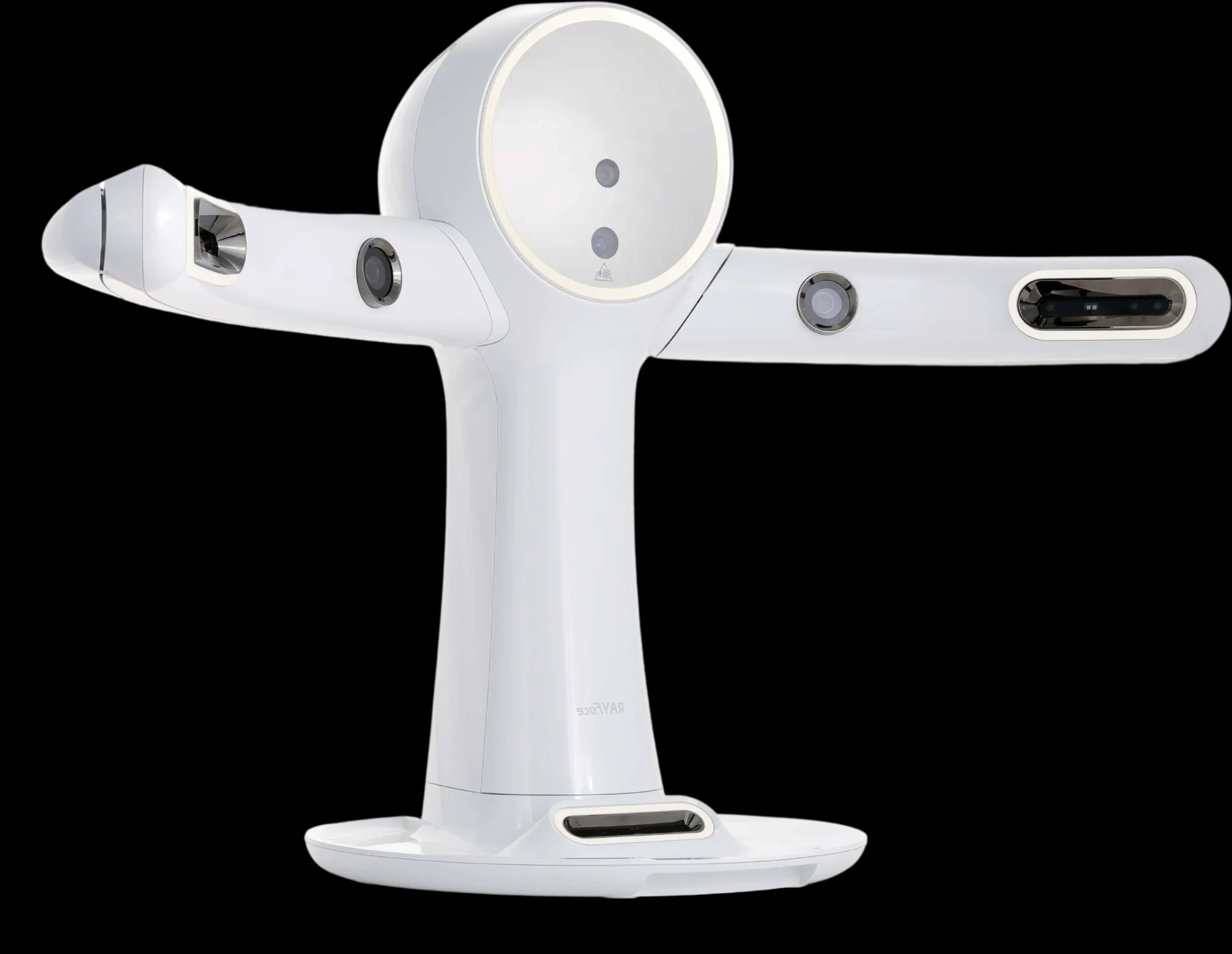
The planning is finished long before surgery day. Your CBCT scan and intraoral scan are already merged into one model, the implant positions are already decided, and the temporary bridge you will leave in has already been designed against them. Nothing about the plan is worked out in the chair.
- Eat a normal breakfast unless we have specifically told you otherwise.
- Take the antibiotic and anti-inflammatory we prescribed, at the time written on the box.
- Bring someone who can drive you home. This is not optional under sedation.
- Wear something with sleeves you can push up, and leave the make-up and lipstick off.
The first hour
You arrive, we take the last photographs, and we go through the plan once more with the model on screen in front of you. Then anaesthesia. Most full-arch cases are done under local anaesthetic with sedation — you are breathing on your own and you can respond, but the day will not feel long, and most patients remember very little of the middle of it.
Placing the implants
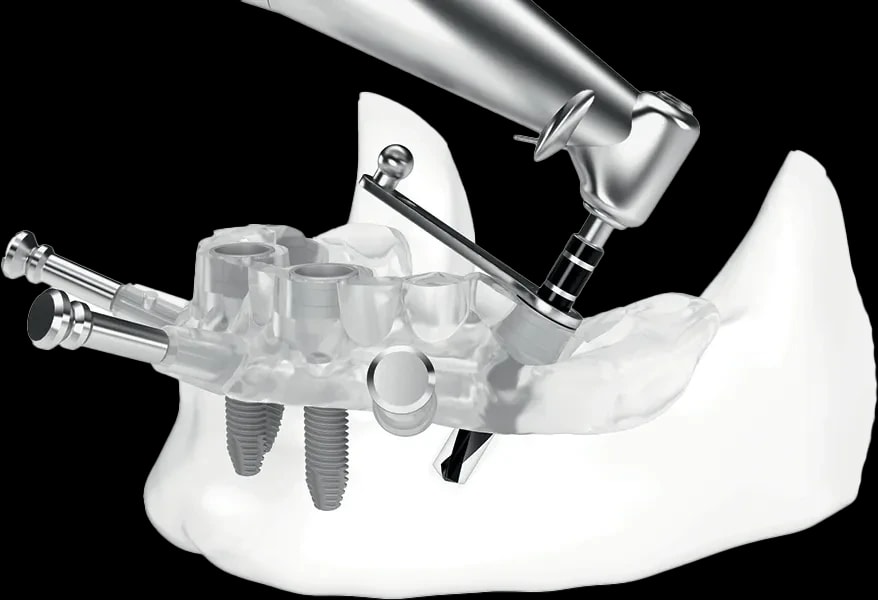
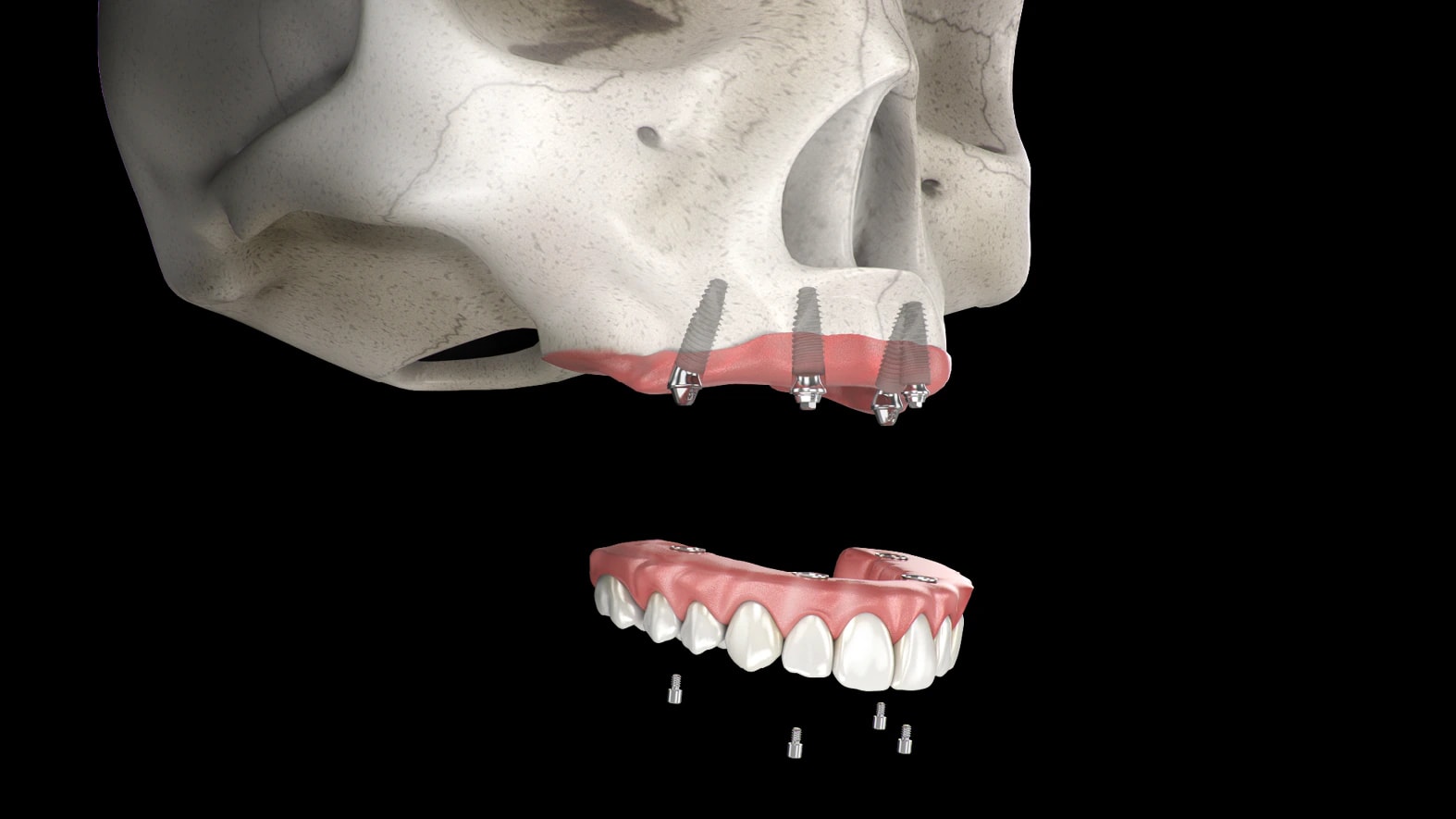
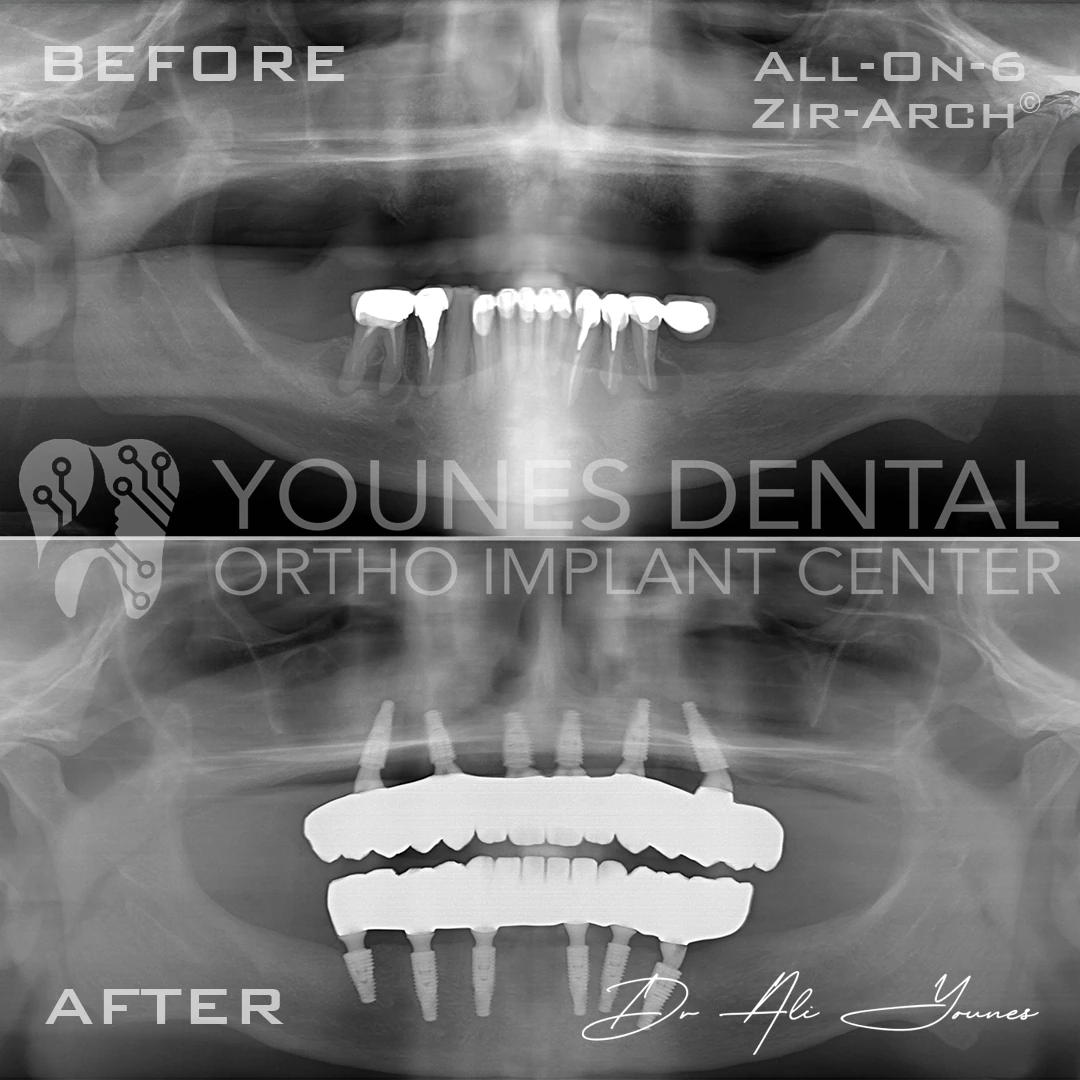
Any remaining teeth in the arch come out first, and the bone is levelled to a predictable ridge. Then the implants are placed — four for an All-on-4, six for an All-on-6, or, where the upper jaw has resorbed too far to hold either, two zygomatic implants anchored in the cheekbone instead.
Every implant is torque-tested as it goes in. That number is the whole basis for whether you leave with fixed teeth the same day: an implant that reaches primary stability can carry a temporary bridge immediately, and one that does not, cannot. We would rather tell you on the day than watch a bridge fail in week three.
Fitting the same-day bridge
This is the long part. The multi-unit abutments go on, the arch is scanned again in its final state, and the temporary bridge is adapted, fitted, adjusted and adjusted again until your bite closes evenly on both sides. Millimetres matter here, and there is no shortcut through it.

The implants decide whether the treatment works. The bite decides whether you are comfortable for the next ten years.
Going home
You will leave with a fixed bridge, a written list of instructions, and a follow-up booked for the next morning. Expect swelling to peak on day two or three rather than on the day itself — that catches people out, because day one usually feels better than they expected.
- Cold compress, twenty minutes on and twenty off, for the first day.
- Soft food only for the first six weeks — the temporary bridge is not a chewing surface for a steak.
- No smoking. This is the single largest controllable risk to implant healing.
- Rinse gently with the solution we give you, starting the day after, never the same evening.
And then the months after
The implants integrate with the bone over roughly three to six months. The temporary bridge carries you through that period; the final bridge, in zirconia, is made once the gum has settled to its permanent shape. Rushing the final bridge is how you end up remaking it.
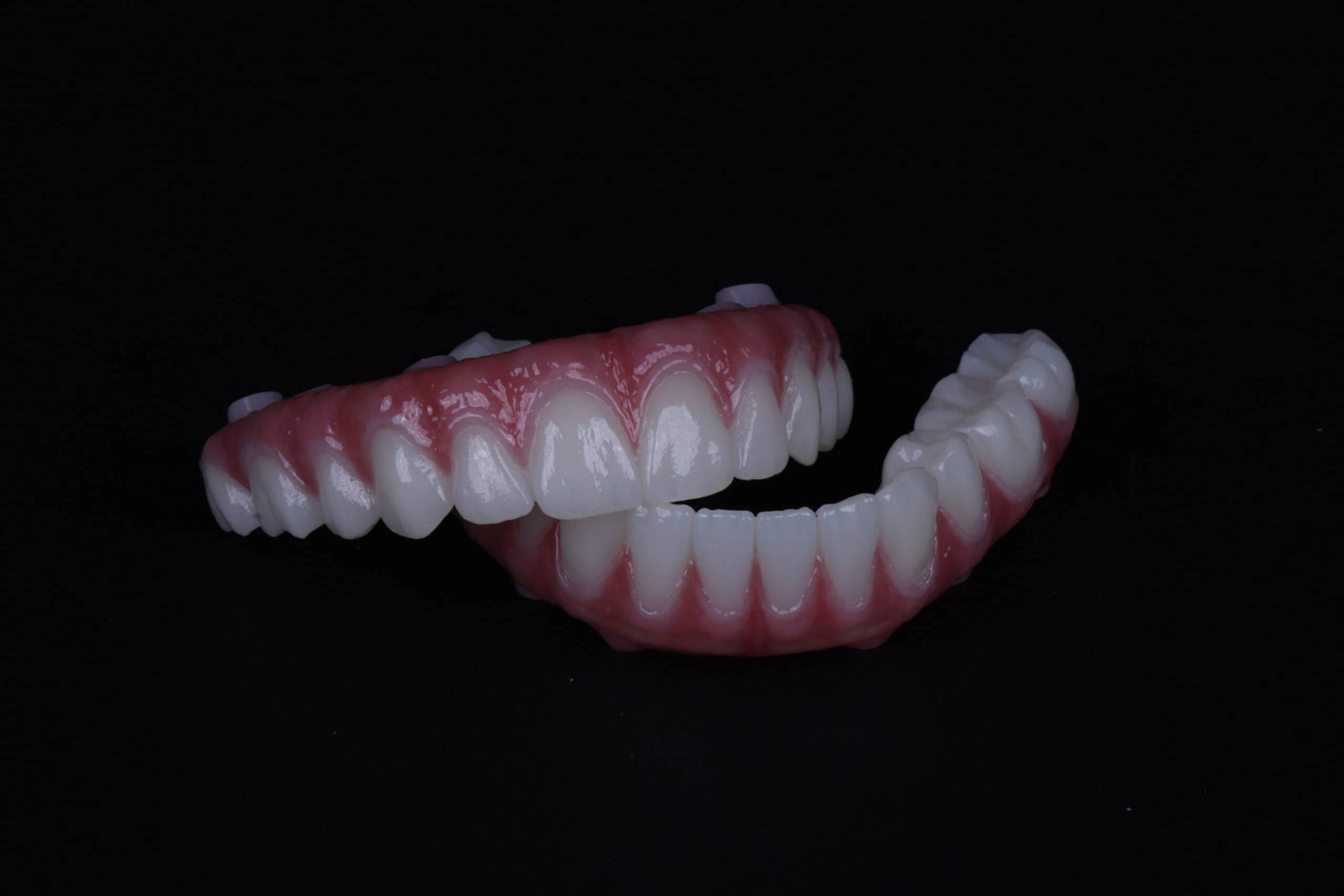
From there it is maintenance, and it is not optional: a review every six months, and a professional clean under the bridge once a year. An implant cannot decay, which is the part people remember. The bone around it can still be lost, which is the part that matters.
Common questions
In the large majority of full-arch cases, yes — a fixed temporary bridge is fitted the same day. It depends on the implants reaching enough primary stability to be loaded immediately, which is measured during surgery rather than assumed beforehand.
Most patients describe the first three days as pressure and swelling rather than sharp pain, and manage on the anti-inflammatories prescribed. Swelling usually peaks on day two or three and settles over the following week.
Plan for a full day. A single arch is typically five to seven hours from arrival to leaving, and both arches together take longer.
Usually three to six months after surgery, once the implants have integrated and the gum has taken its final shape. The temporary bridge is fixed and functional throughout that time.